Construct a congruent angle
key notes :

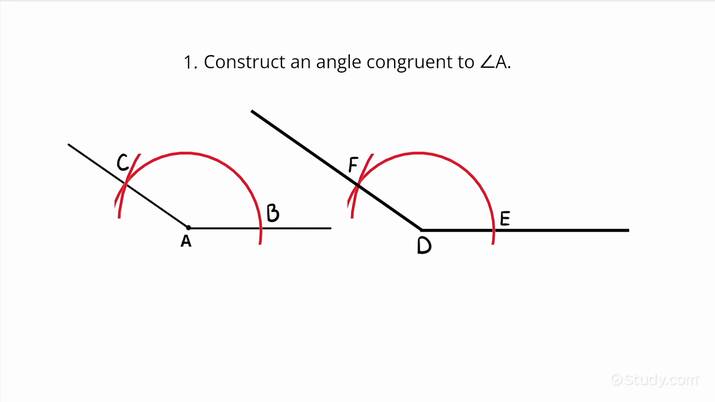

🔹 Meaning
- Congruent angles are angles that have the same measure.
- Constructing a congruent angle means copying an angle exactly using geometric tools.
🔹 Tools Required
- Compass
- Ruler / Straightedge
- Pencil
🔹 Given
- A given angle ∠ABC
- A point (say P) where the congruent angle must be constructed
🔹 Steps to Construct a Congruent Angle
- Draw a ray starting from point P (this will be one arm of the new angle).
- Place the compass at the vertex of the given angle and draw an arc that cuts both arms of the angle.
- Without changing the compass width, draw the same arc from point P on the new ray.
- Measure the distance between the two arc intersection points on the given angle using the compass.
- With the same distance, mark a point on the new arc drawn from P.
- Join point P to the marked point.
👉 The angle formed is congruent to the given angle.
🔹 Key Properties
- The measure of both angles is equal.
- The construction uses only compass and ruler (no protractor).
- Lengths and arcs used are kept unchanged.
🔹 Important Notes
- Do not change the compass opening during the steps.
- Accuracy depends on careful marking of arcs.
- This method works for acute, obtuse, and right angles.
🔹 Applications
- Used in geometric constructions
- Helps in triangle constructions
- Important for proofs involving congruence
🔹 Example Statement
- If ∠ABC = 45°, then the constructed angle ∠PQR = 45°, hence
∠ABC ≅ ∠PQR
Learn with an example
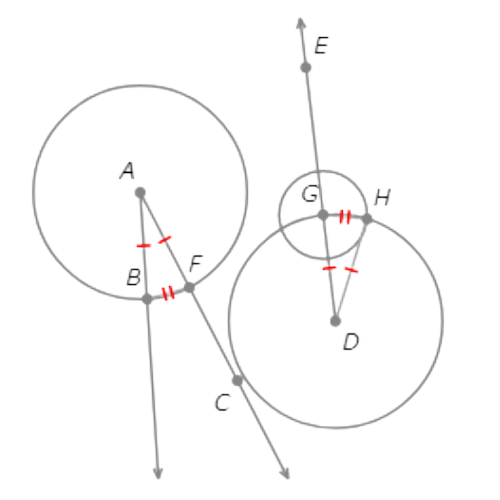
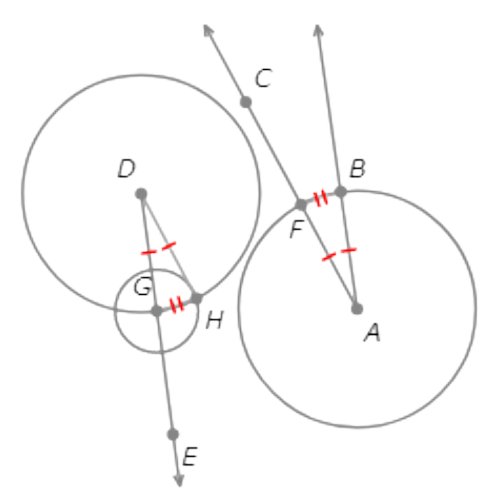
🌀 The diagram below shows a nearly completed construction of an angle congruent to ∠A with vertex D and side DE.
⨀D was drawn with radius AB.
⨀G was drawn with radius BF.
Complete the construction.
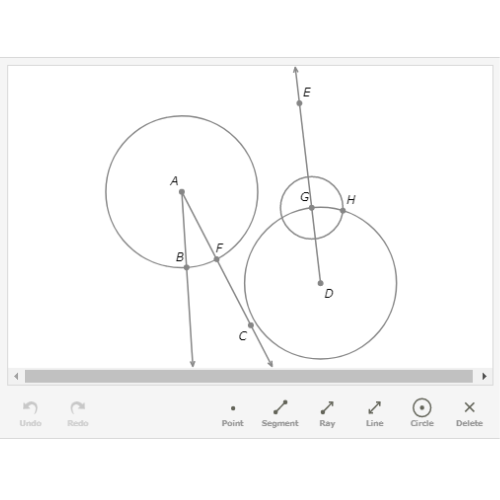
Part of the construction was done for you. Here are the steps to create this part of the construction.
Start with the objects in the diagram below.
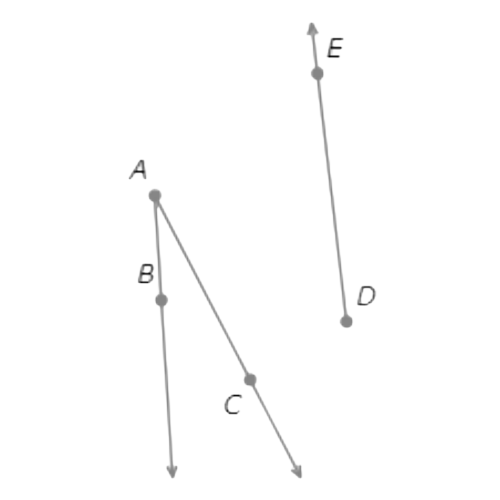
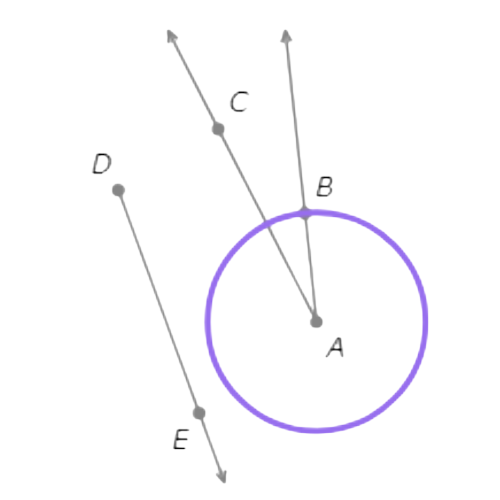
Draw a circle with radius AB centred at A.
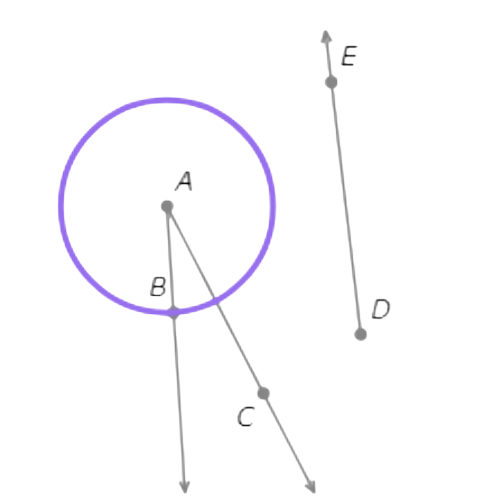
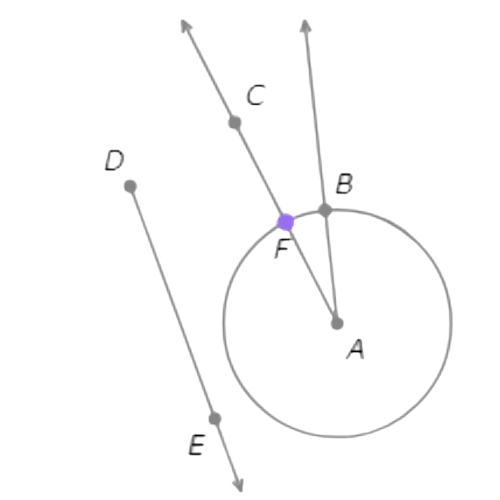
Mark the point where ⨀A and AC intersect. Call it F.
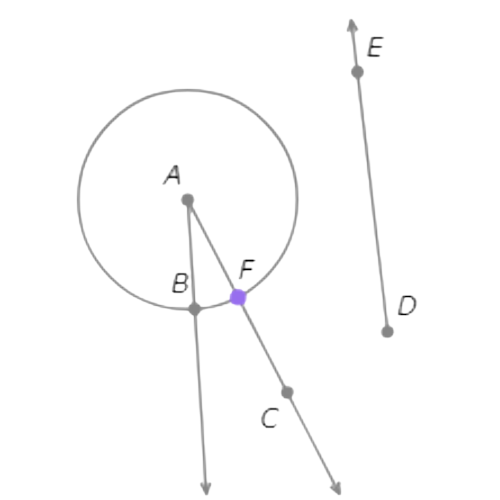
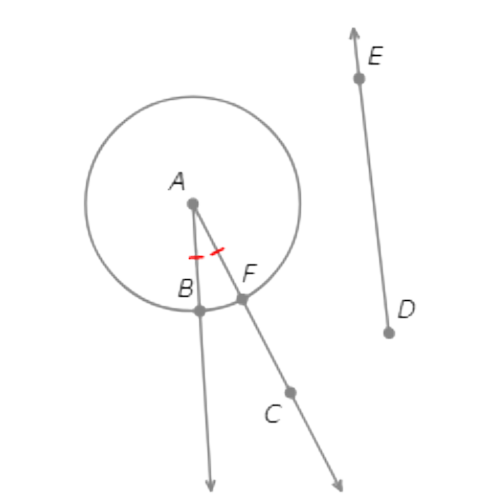
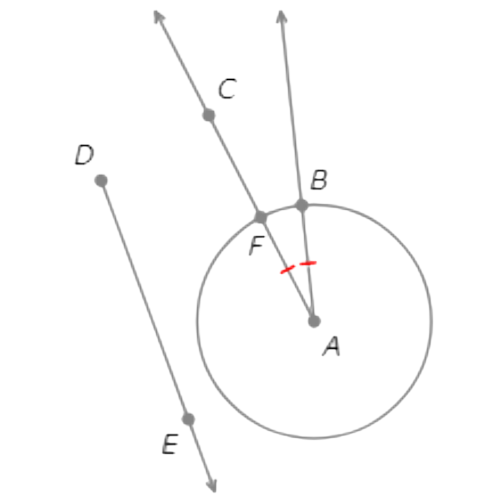
Since B and F are both on ⨀A, AB=AF.
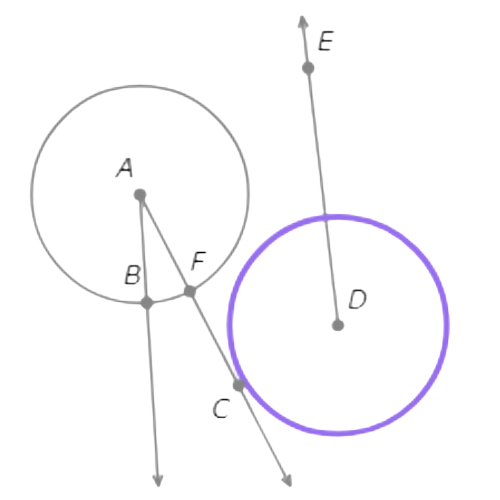
Draw a circle with radius AB centred at D.
Mark the point where ⨀D and DE intersect. Call it G.
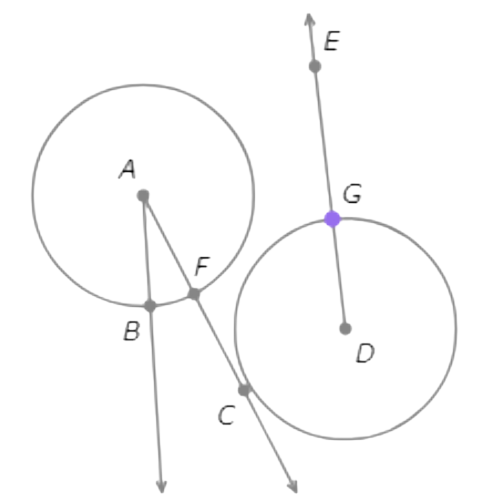
Since ⨀D has radius AB, DG=AB.
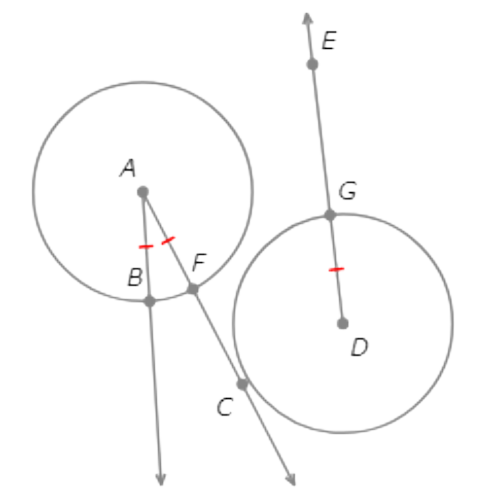
Draw a circle with radius BF centred at G.
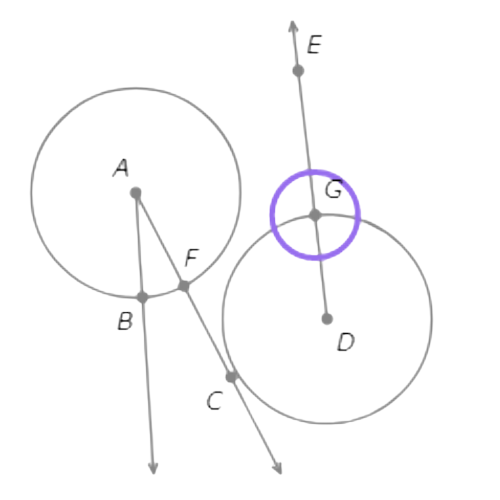
Mark a point where ⨀D and ⨀G intersect. Call it H.
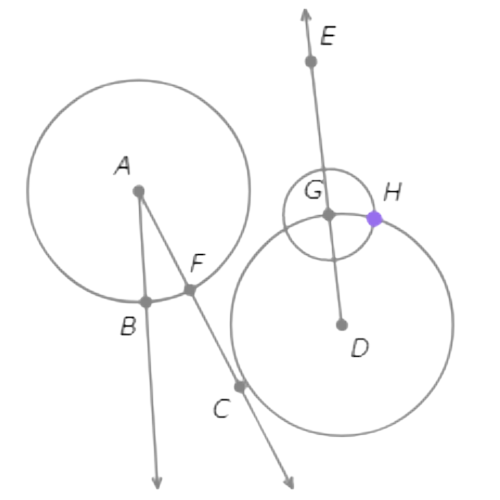
Since ⨀G has radius BF, GH=BF.
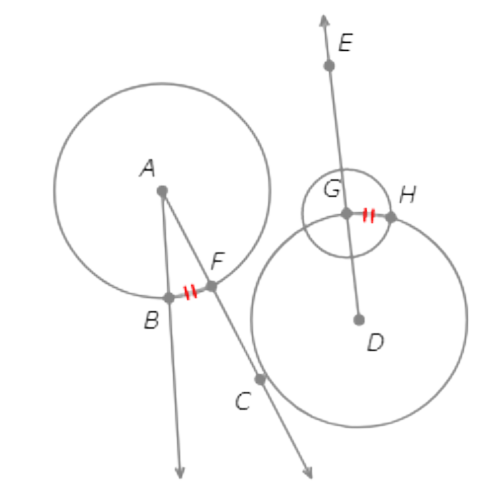
Since ⨀D has radius AB, DH=AB=AF.
Complete the construction.
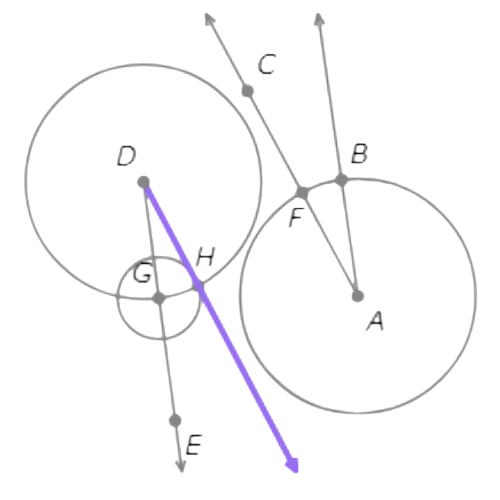
To complete the construction of an angle congruent to ∠A with vertex D and side DE, carry out the following step:
- Draw a ray from D through H.
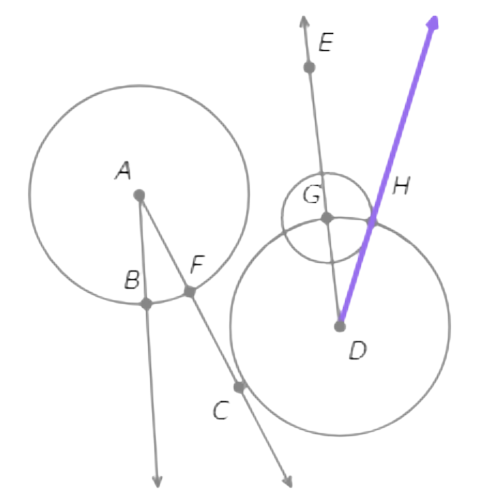
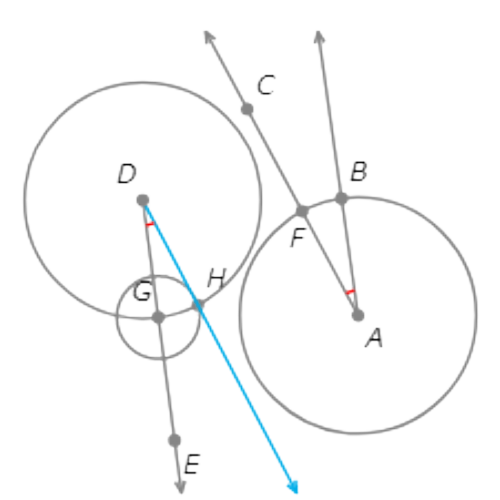
Since DG=AB, GH=BF, and DH=AF, △DGH≅△ABF by the SSS Theorem. So, ∠BAF≅∠GDH by CPCTC.
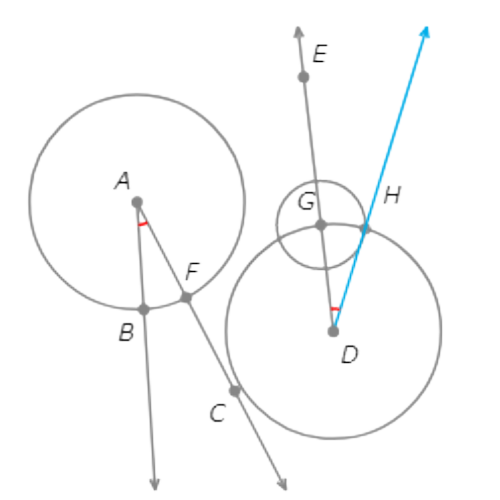
🌀 The diagram below shows a nearly completed construction of an angle congruent to ∠A with vertex D and side DE.
⨀D was drawn with radius AB.
⨀G was drawn with radius BF.
Complete the construction.
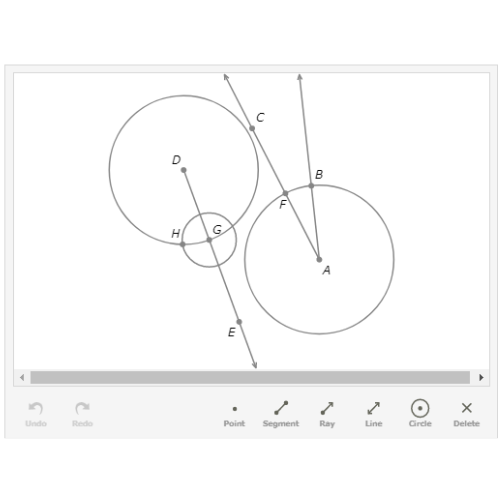
Part of the construction was done for you. Here are the steps to create this part of the construction.
Start with the objects in the diagram below.
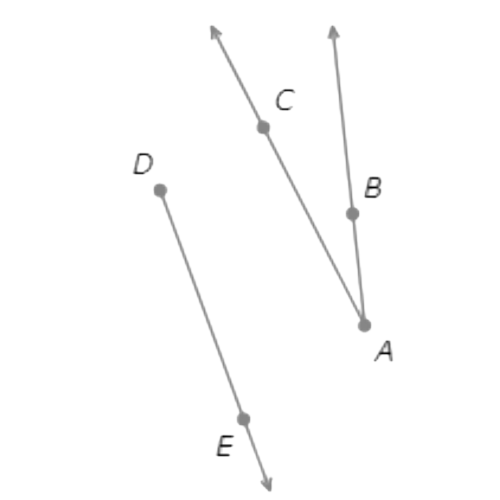
Draw a circle with radius AB centred at A.
Mark the point where ⨀A and AC intersect. Call it F.
Since B and F are both on ⨀A, AB=AF.
Draw a circle with radius AB centred at D.
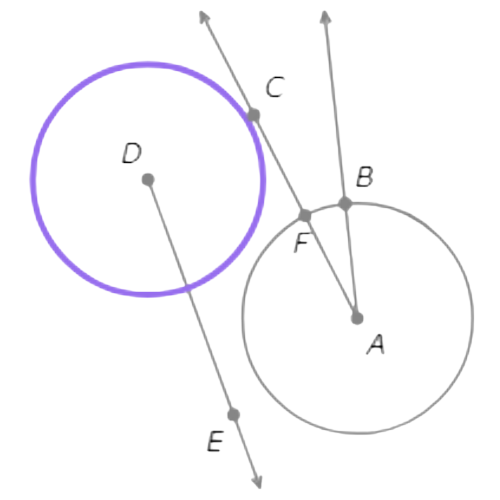
ark the point where ⨀D and DE intersect. Call it G.
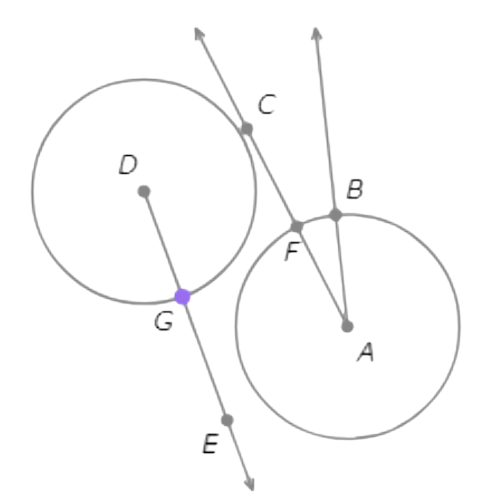
Since ⨀D has radius AB, DG=AB.
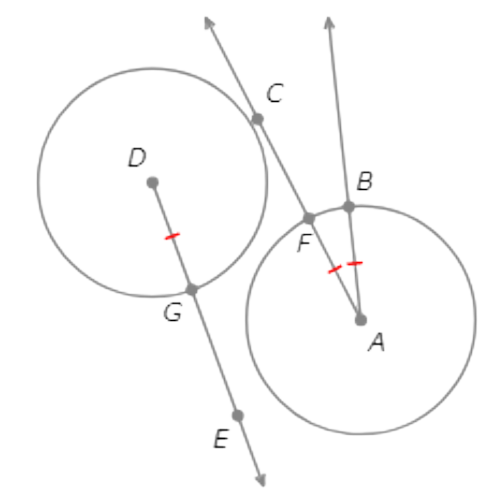
Draw a circle with radius BF centred at G.
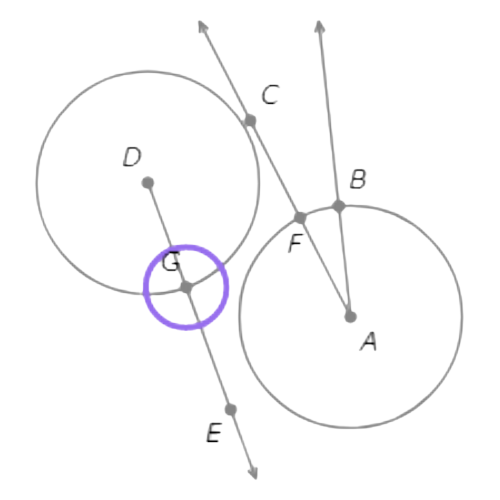
Mark a point where ⨀D and ⨀G intersect. Call it H.
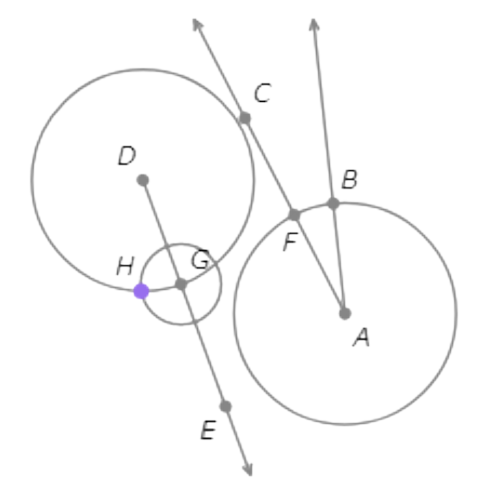
Since ⨀G has radius BF, GH=BF.
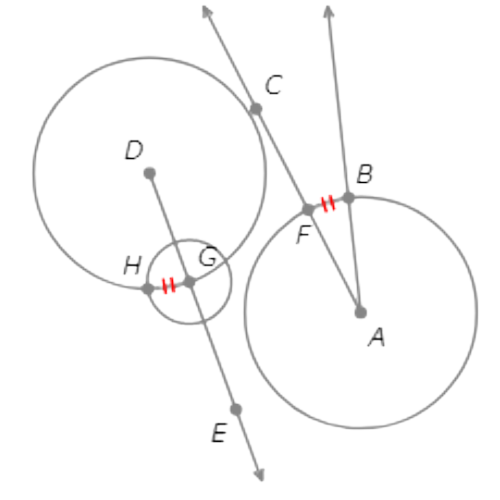
Since ⨀D has radius AB, DH=AB=AF.
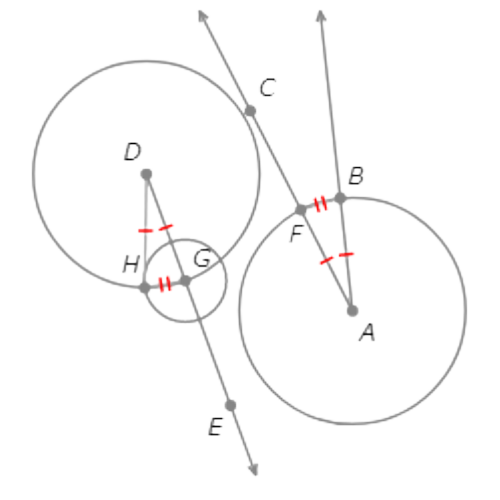
Complete the construction.
To complete the construction of an angle congruent to ∠A with vertex D and side DE, carry out the following step:
- Draw a ray from D through H.
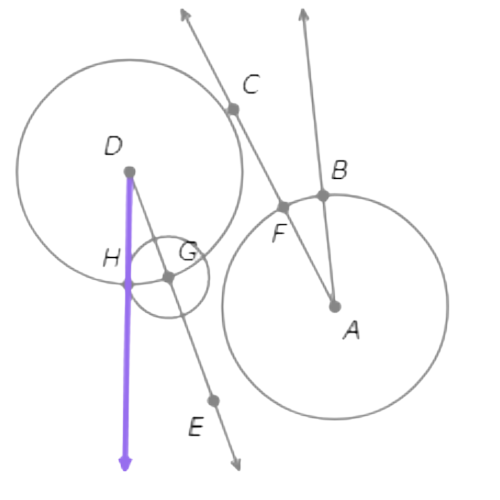
Since DG=AB, GH=BF, and DH=AF, △DGH≅△ABF by the SSS Theorem. So, ∠BAF≅∠GDH by CPCTC.
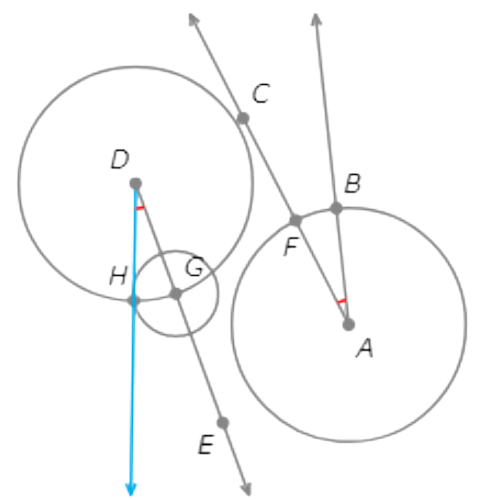
🌀 The diagram below shows a nearly completed construction of an angle congruent to ∠A with vertex D and side DE.
⨀D was drawn with radius AB.
⨀G was drawn with radius BF.
Complete the construction.
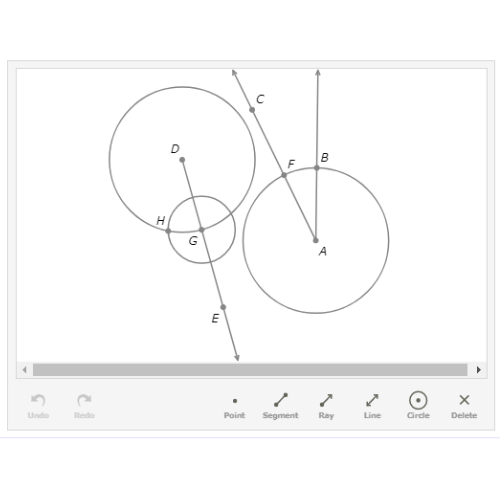
Part of the construction was done for you. Here are the steps to create this part of the construction.
Start with the objects in the diagram below.
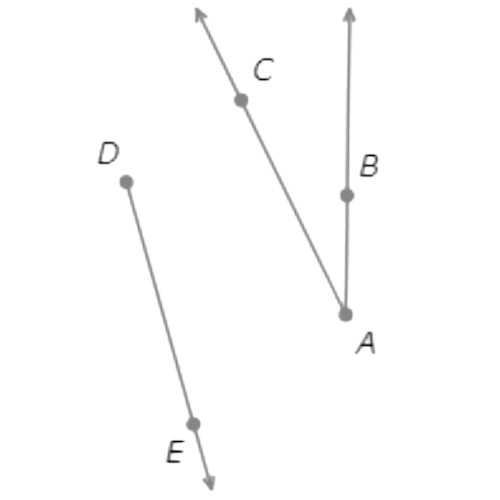
Draw a circle with radius AB centred at A.
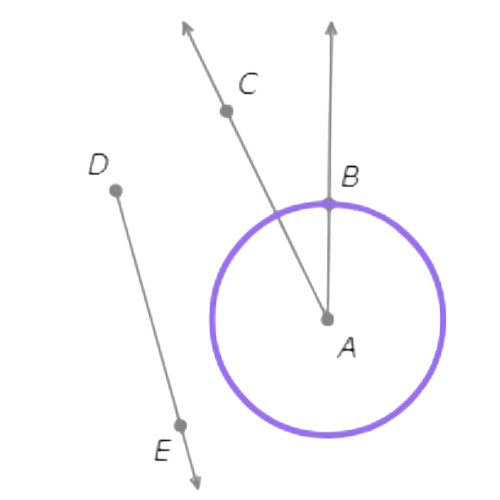
Mark the point where ⨀A and AC intersect. Call it F.
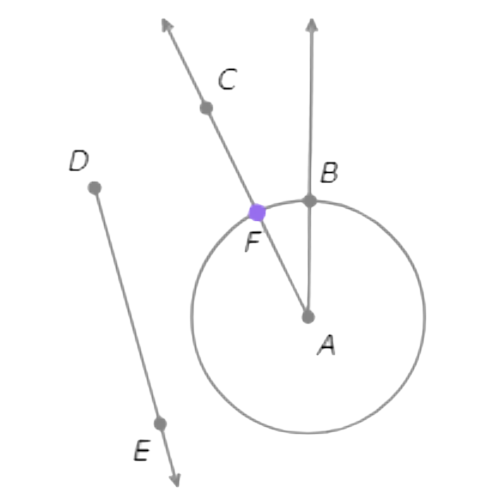
Since B and F are both on ⨀A, AB=AF.
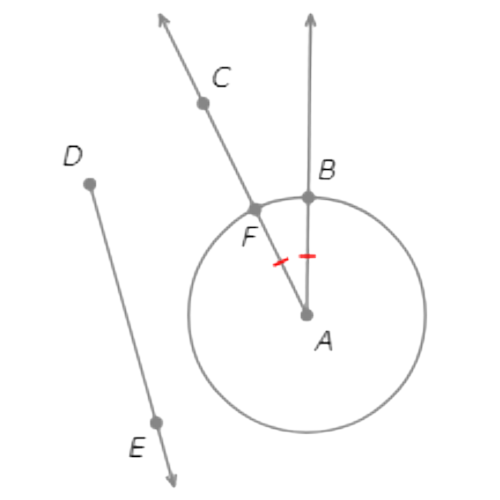
Draw a circle with radius AB centred at D.
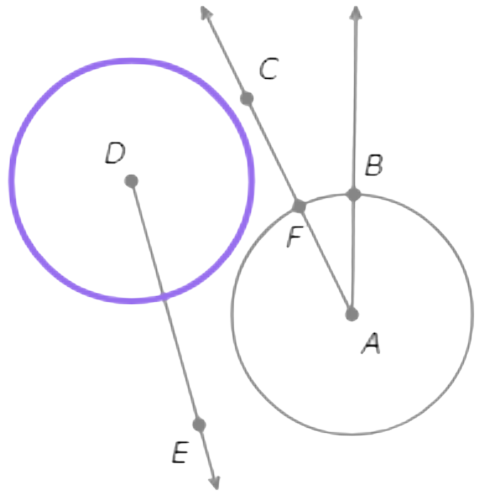
Mark the point where ⨀D and DE intersect. Call it G.
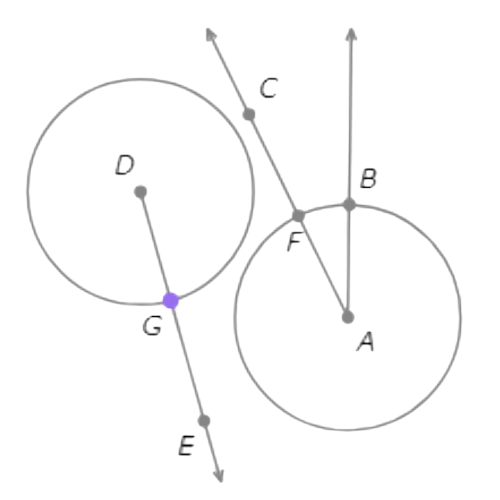
Since ⨀D has radius AB, DG=AB.
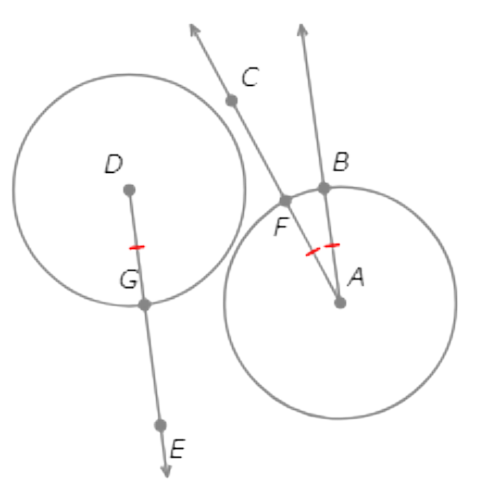
Draw a circle with radius BF centred at G.
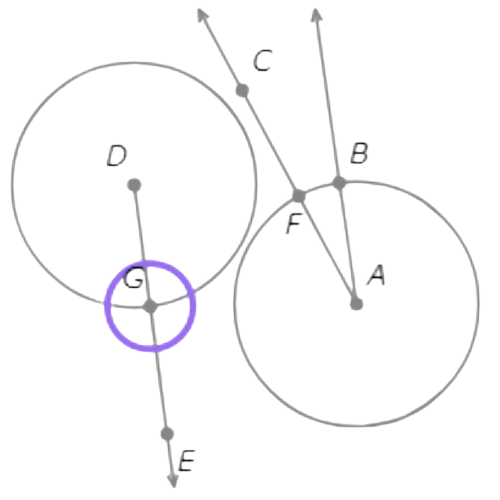
Mark a point where ⨀D and ⨀G intersect. Call it H.
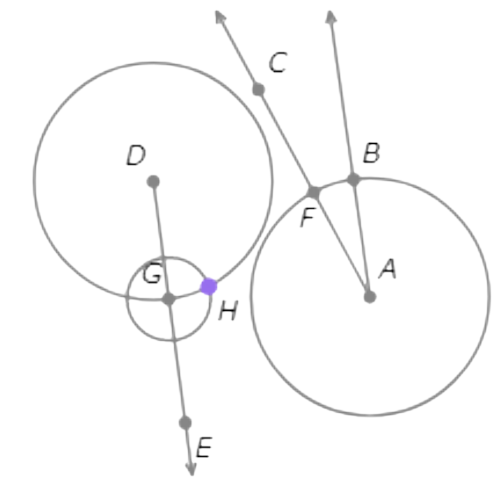
Since ⨀G has radius BF, GH=BF.
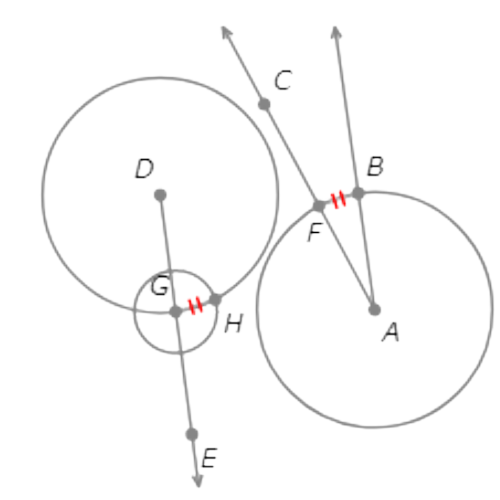
Since ⨀D has radius AB, DH=AB=AF.
Complete the construction.
To complete the construction of an angle congruent to ∠A with vertex D and side DE, carry out the following step:
- Draw a ray from D through H.
Since DG=AB, GH=BF, and DH=AF, △DGH≅△ABF by the SSS Theorem. So, ∠BAF≅∠GDH by CPCTC.
let`s practice!