Construct an angle bisector
Key Notes :


🔹 What is an Angle Bisector?
- An angle bisector is a line or ray that divides an angle into two equal angles.
- If ∠ABC is an angle, its bisector splits it into two congruent angles.
🔹 Tools Required
- ✏️ Pencil
- 📏 Ruler (straightedge)
- 🧭 Compass
🔹 Steps to Construct an Angle Bisector
- Draw the given angle ∠ABC.
- Place the compass at the vertex (B) and draw an arc that cuts both arms of the angle at points P and Q.
- Without changing the compass width, place it at P and draw an arc inside the angle.
- Again, with the same width, place the compass at Q and draw another arc to intersect the previous arc at point R.
- Use a ruler to join B and R.
- BR is the angle bisector of ∠ABC.
🔹 Important Properties
- The angle bisector divides the angle into two equal parts.
- Every angle has one and only one bisector.
- Points on the angle bisector are equidistant from both arms of the angle.
- Angle bisectors are used in triangle constructions, especially for incentres.
🔹 Key Tips for Exams 📝
- Always show construction arcs clearly.
- Do not erase arcs unless instructed.
- Label points neatly for clarity.
- Mention the steps in correct order in construction questions.
🔹 Real-Life Application
- Used in architecture and engineering to divide angles accurately.
- Helps in design symmetry and precise measurements.
Learn with an example
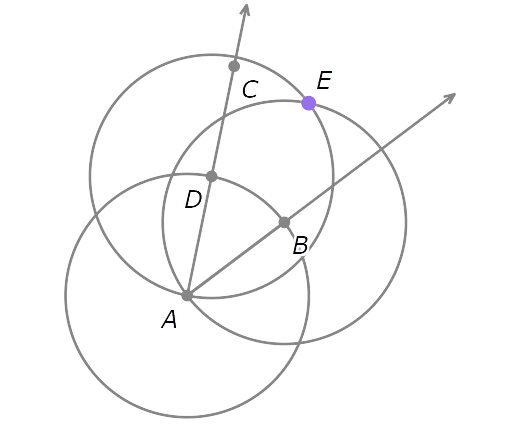
The diagram below shows a nearly completed construction of the bisector of ∠A. Complete the construction.
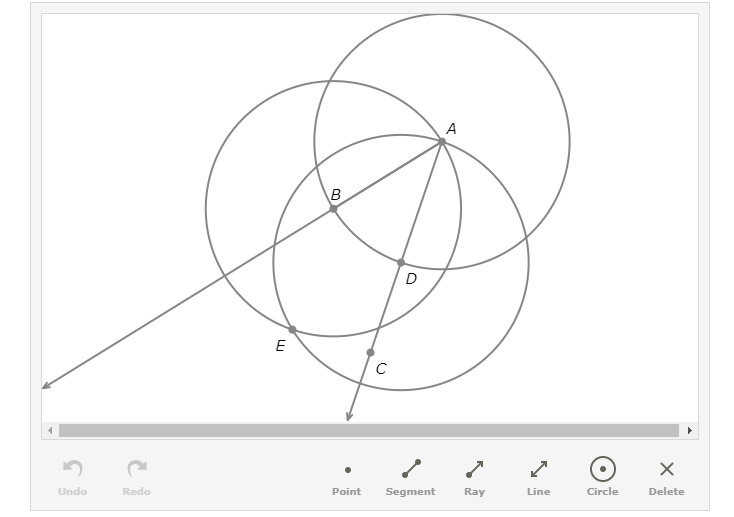
Part of the construction was done for you. Here are the steps to create this part of the construction.
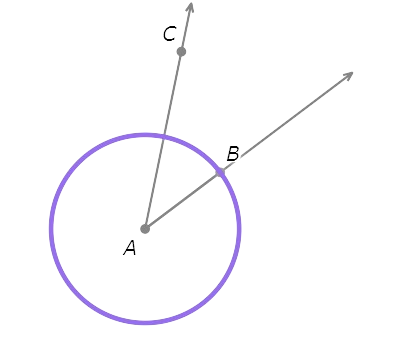
Start with the objects in the diagram below.
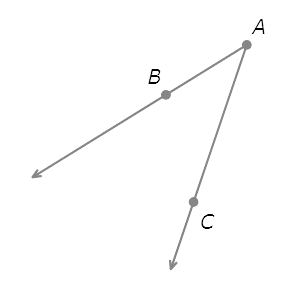
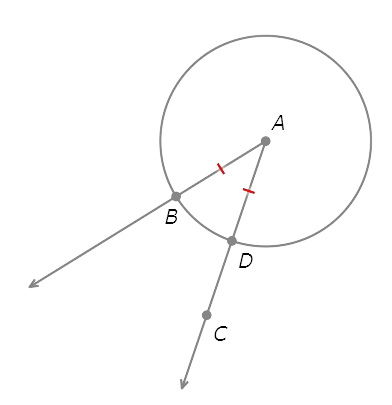
- Draw a circle with radius AB centred at A.
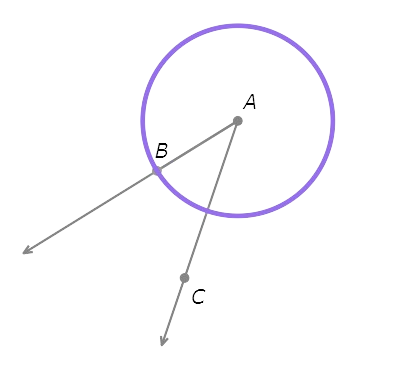
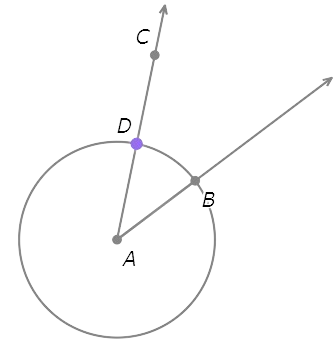
- Mark the point where ⨀A and AC intersect. Call it D.
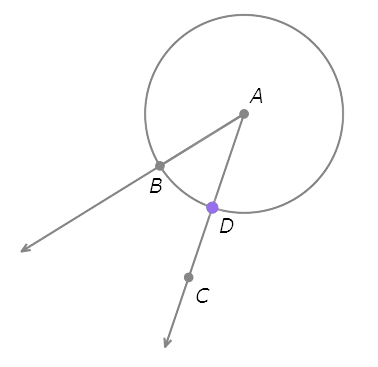
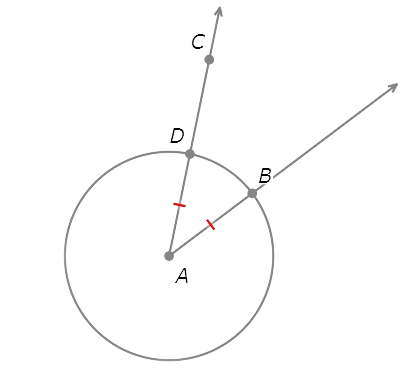
Since B and D are both on ⨀A, AB=AD.
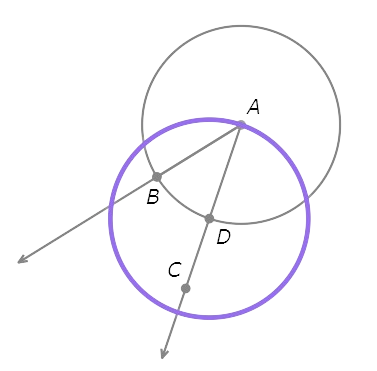
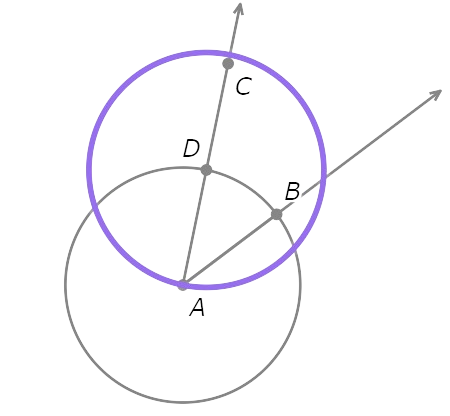
- Draw a circle with radius AB centred at D.
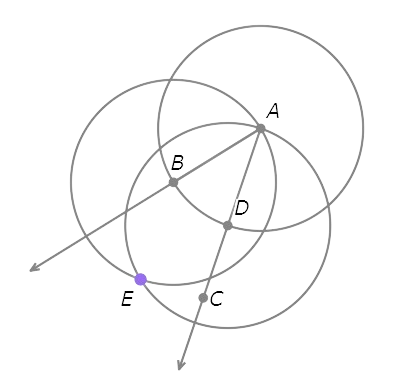
- Draw a circle with radius AB centred at B.

- Mark the point other than A where ⨀B and ⨀D intersect. Call it E.
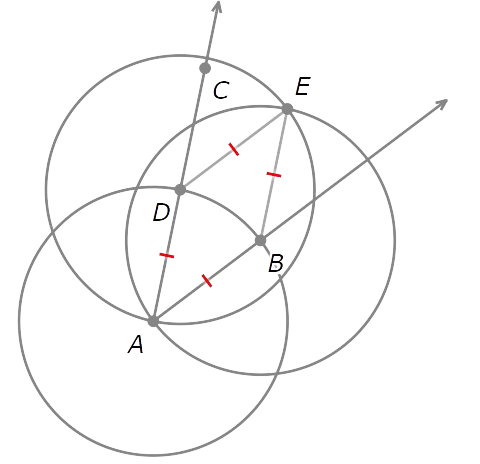
Since A and E are both on ⨀B, AB=BE. Since A and E are both on ⨀D, AD=DE. Since AB=AD, AB=AD=BE=DE.
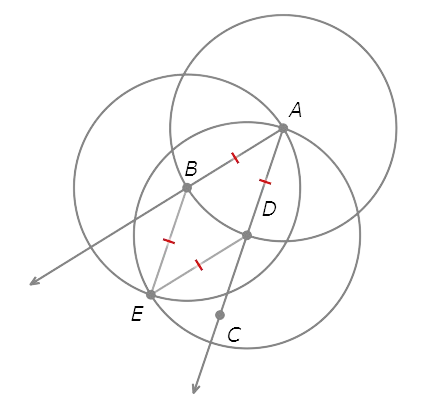
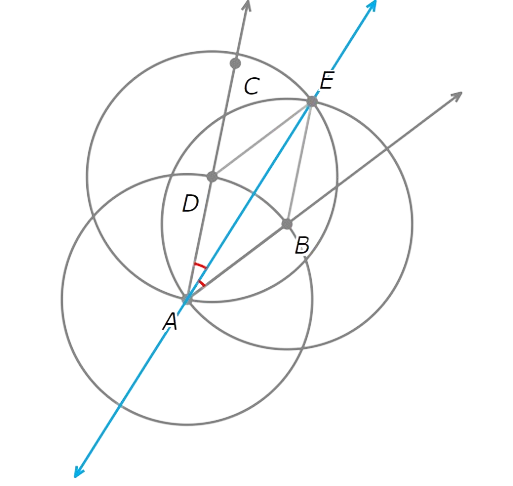
Complete the construction.
To complete the construction of the bisector of ∠A, carry out the following step:
- Draw the line through A and E.
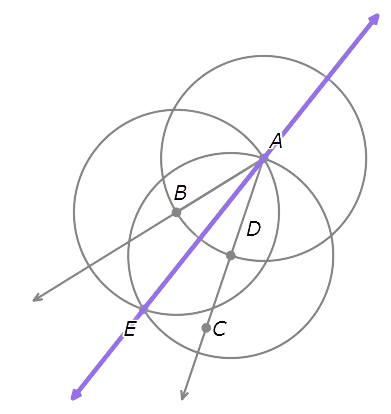
Since AB=AD=BE=DE, quadrilateral ABDE is a rhombus. So, the diagonal
AE is the bisector of ∠A.
The diagram below shows a nearly completed construction of the bisector of ∠A. Complete the construction.
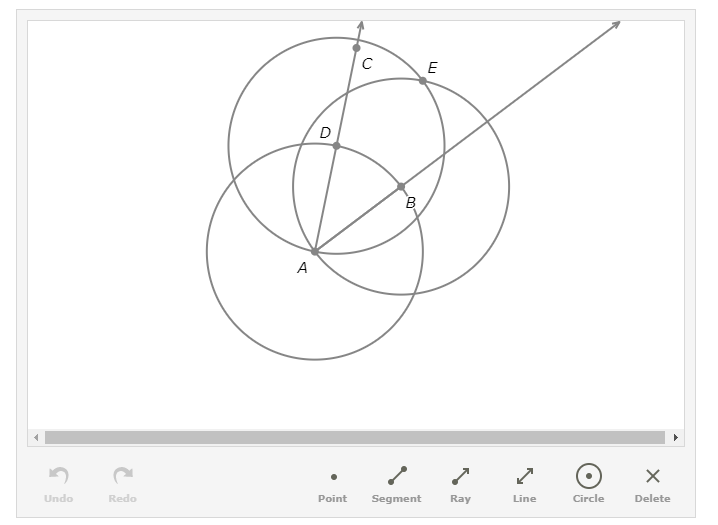
Part of the construction was done for you. Here are the steps to create this part of the construction.
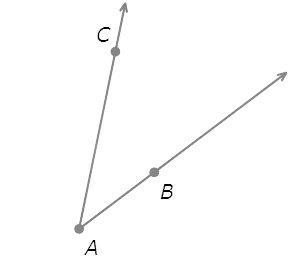
Start with the objects in the diagram below.
- Draw a circle with radius AB centred at A.
- Mark the point where ⨀A and AC intersect. Call it D.
Since B and D are both on ⨀A, AB=AD.
- Draw a circle with radius AB centred at D.
- Draw a circle with radius AB centred at B.

- Mark the point other than A where ⨀B and ⨀D intersect. Call it E.
Since A and E are both on ⨀B, AB=BE. Since A and E are both on ⨀D, AD=DE. Since AB=AD, AB=AD=BE=DE.
Complete the construction.
To complete the construction of the bisector of ∠A, carry out the following step:
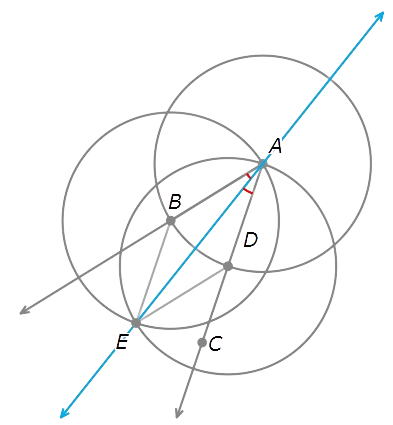
- Draw the line through A and E.

Since AB=AD=BE=DE, quadrilateral ABDE is a rhombus. So, the diagonal
AE is the bisector of ∠A.
let’s practice!